
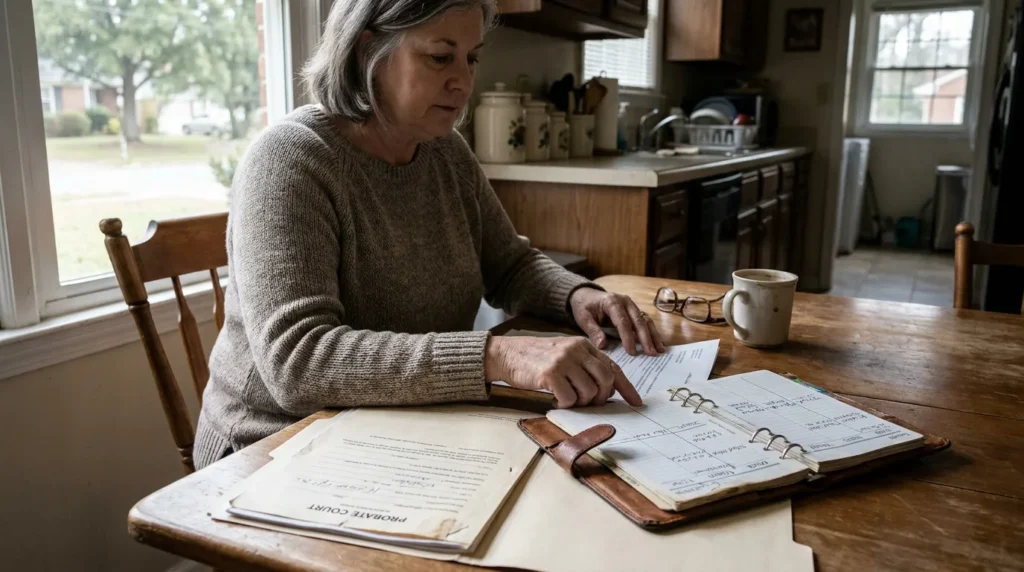
Understanding How Long Probate Really Takes in South Carolina
Key Takeaways: Probate in South Carolina typically takes eight to twelve months because state law requires an eight-month creditor claims period from first publication of the Notice to Creditors. For Fort Mill families in York County, the process includes filing the original will within 30 days of death, notifying heirs within 30 days of appointment, and preparing an inventory within 90 days. Small estates with no real property and personal property of $45,000 or less may be administered quickly after filing, though they cannot be filed until 30 days after the date of death. Having a will does not avoid probate; only a properly funded revocable living trust passes assets outside court administration. Taxable issues, real property sales, or out-of-state assets can extend the timeline. Working with a knowledgeable probate attorney helps families avoid costly delays while meeting every required deadline.
Most families are surprised that probate in South Carolina generally takes eight to twelve months, and sometimes longer. If you have recently lost a loved one in Fort Mill, you are likely wondering how long it will take to settle the estate and distribute property. The honest answer is that a typical, uncontested estate rarely closes in less than eight months because of a mandatory waiting period built into state law.
At Sawyer & Associates, we guide executors and beneficiaries across South Carolina and four neighboring states through this process with clarity and compassion. You can reach our team through our secure contact page, call us at 803-598-0082, or learn more at Sawyer & Associates.

Why South Carolina Probate Usually Takes 8 to 12 Months
The single biggest driver of the probate timeline in South Carolina is the creditor claims period. Under state law, creditors generally must present claims by the earlier of one year after the date of death or eight months after the date of first publication of the Notice to Creditors. In most administrations where notice is published shortly after appointment, the eight-month publication deadline controls. A personal representative cannot safely close the estate and distribute assets until that window has passed and any valid claims are resolved.
This waiting period explains why even a simple estate cannot move quickly. Local probate guidance reflects this reality: a regular estate will take at least eight months, and you should probably allow at least a year for an untaxable and uncontested estate to close. When you add taxable issues, real property sales, or out-of-state assets, the probate duration in Fort Mill can stretch toward the upper end or beyond.
💡 Pro Tip: Mark your calendar with the date the Notice to Creditors is first published. That single date sets the clock for the entire creditor claims period and helps you estimate a realistic closing date.
The Probate Timeline Step by Step in York County
Because Fort Mill sits in York County, estates of local residents are generally administered through the York County Probate Court. Venue for the first informal or formal testacy or appointment proceedings after a decedent’s death is in the county where the decedent had his domicile at the time of his death. Knowing the sequence of steps helps you understand where the months actually go.
Filing the Will and Opening the Estate
The process begins with filing the original will and opening the estate. South Carolina requires that the original will be filed with the Probate Court within 30 days from the date of death. The court then appoints a personal representative, and state law sets a clear priority order. Section 62-3-203(a) lists, in order, the person determined by the probated will, a surviving spouse who is a devisee, other devisees, the surviving spouse, and then other heirs.
Smaller estates may follow a faster track, but they are not immune to the timeline. A small estate with no real property and a probate estate of $45,000 or less (after subtracting liens and encumbrances) can move much faster. Still, a small estate may be administered quickly after filing but cannot be filed until thirty days after the date of death. That 30-day floor applies even to the simplest cases.
Notifying Heirs and Creditors
Once appointed, the personal representative carries immediate notice duties. The representative must publish the Notice to Creditors promptly after appointment. Immediately after his appointment he shall publish the notice to creditors required by Section 62-3-704(a), which directs compliance with Section 62-3-801. Publication is to be once a week for three successive weeks in a newspaper of general circulation in the county, and in Lancaster County, the Probate Court now handles this for you. Procedures can vary by county, so confirm how publication is handled in York County.
Heirs and devisees must also be informed within a defined window. Within 30 days after your appointment, you must give information of your appointment to heirs and devisees by delivering or sending the information via ordinary mail to each heir and devisee whose address is reasonably available. You can review the statutory framework in Title 62’s probate of wills and administration provisions.
Inventory, Claims, and Final Distribution
The personal representative also has reporting and stewardship obligations throughout administration. State law requires an inventory of estate property early in the process. Within ninety days after his appointment, a personal representative shall prepare an inventory and appraisement of probate property. This inventory gives the court and beneficiaries a clear picture of what the estate holds.
Above all, a personal representative owes a duty of diligence to the estate. A personal representative has a duty to settle and distribute the estate of the decedent in accordance with the terms of a probated and effective will and this code, and as expeditiously and efficiently as is consistent with the best interests of the estate. Moving efficiently does not mean rushing past the creditor period; it means avoiding unnecessary delay within the legal structure.
💡 Pro Tip: Keep organized records of every estate transaction from day one. Accurate accounting reduces friction at final distribution and supports your defense if a beneficiary questions your handling.
The general sequence looks like this:
| Stage | Typical Timing |
|---|---|
| File original will | Within 30 days of death |
| Appointment and publish notice | Shortly after filing |
| Notify heirs and devisees | Within 30 days of appointment |
| Inventory and appraisement | Within 90 days of appointment |
| Creditor claims period | Eight months from first publication |
| Final accounting and distribution | Often around one year |
Why Having a Will Does Not Avoid Probate
One of the most common and costly misunderstandings is the belief that a will avoids probate. A will does not keep an estate out of court. Instead, a will is the document the Probate Court uses to guide the very process described above. If your loved one left a valid will, it generally must still be probated before assets pass to the named beneficiaries.
A revocable living trust, by contrast, is the tool designed to pass assets outside of probate. In each of the three states our firm serves, including South Carolina, assets properly titled in a funded revocable living trust generally transfer without court administration. This distinction matters for families who want to spare loved ones the eight to twelve month wait. You can read more practical guidance on our estate settlement resources.
💡 Pro Tip: If you are inheriting through a will, ask early whether any accounts had beneficiary designations or joint ownership. Those assets often pass outside probate, which can ease cash flow while the rest of the estate is administered.
How a probate lawyer Fort Mill SC Can Help You Avoid Delays
A knowledgeable probate attorney in Fort Mill can help you keep an estate moving without missing a required step. While the eight-month creditor period is fixed by statute, many delays come from avoidable problems like incomplete inventories, late notices, or title issues on real property. Working with counsel who understands the probate court timeline in SC can reduce the risk of setbacks. Our team supports clients through every phase of the Fort Mill probate process.
Guidance becomes especially valuable when an estate involves complicating factors. These may include multi-state property, outstanding debts, or a family member who needs nursing home care and Medicaid crisis planning. Outcomes always depend on the specific facts, so general timelines are estimates rather than promises.
Here are practical ways families can support smoother administration:
- Locate and file the original will promptly within the 30-day window.
- Gather account statements, deeds, and tax records early for the inventory.
- Track the creditor publication date to estimate the closing timeline.
- Avoid distributing assets before the claims period closes.
Frequently Asked Questions
1. How long does probate take in South Carolina?
Most South Carolina estates take at least eight months, often closer to a year. This is largely because creditors have until the earlier of one year after death or eight months from first publication of notice to file claims, and the estate generally cannot close until that period ends.
2. Can a small estate be settled faster in York County?
Yes, qualifying small estates move much faster. An estate with no real property and a probate estate of $45,000 or less may be administered quickly after filing, though it still cannot be filed until 30 days after the date of death.
3. Does a will let my family skip probate in Fort Mill?
No, a will does not avoid probate. A will guides the court process rather than replacing it. A properly funded revocable living trust is the tool used to pass assets outside of probate.
4. What are the personal representative’s main deadlines?
Several deadlines apply early in administration. The original will is filed within 30 days of death, heirs are notified within 30 days of appointment, and an inventory is prepared within 90 days of appointment under Section 62-3-706(A).
5. Where can I read the actual South Carolina probate law?
The full statutory code is publicly available. You can review the state’s probate rules in the official overview of probating an estate guidance and the underlying statutes governing administration.
Moving Forward With Confidence
Probate in South Carolina is a structured process that takes time, generally eight to twelve months for an uncontested estate. Much of that timeline reflects the eight-month creditor claims period rather than any failure on the family’s part. By understanding each step, meeting deadlines, and keeping careful records, executors in Fort Mill and across York County can fulfill their fiduciary duties while minimizing delay and stress.
If you are navigating an estate or planning ahead to spare your family this wait, the team at Sawyer & Associates is ready to help. Call us today at 803-598-0082 or reach out through our confidential consultation request to discuss your situation with a compassionate, multi-state probate team.