
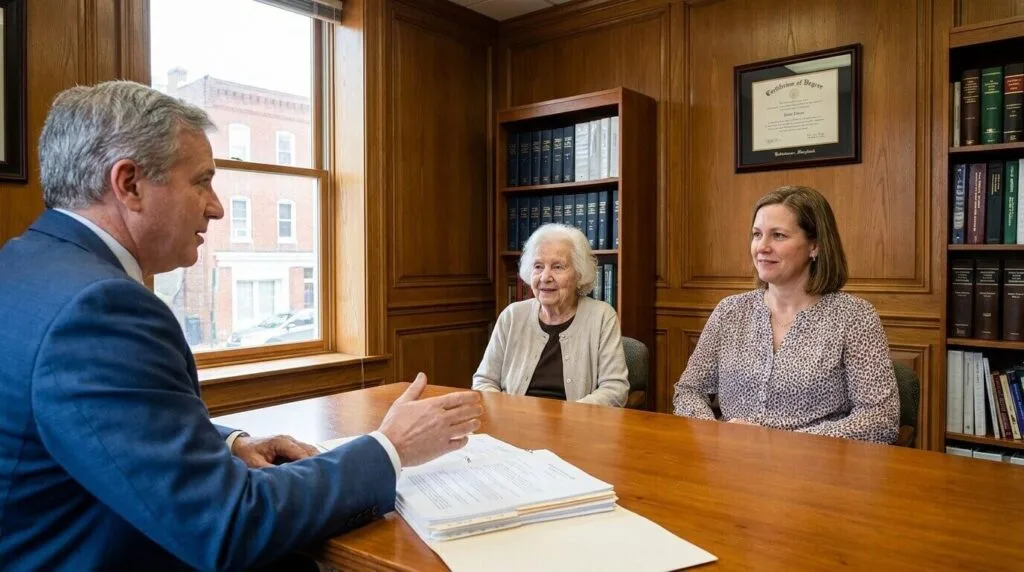
How a Baltimore Elder Law Attorney Helps Families Plan With Confidence
Key Takeaways: An elder law attorney in Baltimore, MD helps families protect aging loved ones by coordinating estate planning, benefits guidance, and safeguards against abuse. They prepare essential tools such as wills, revocable living trusts, durable powers of attorney, and advance healthcare directives, while clarifying that a will alone does not avoid probate. These attorneys guide families through long-term care and Medicaid crisis planning, help veterans access benefits, and stay current as Medicaid, Medicare, and disability rules change. They also recognize and respond to elder abuse and neglect under Maryland law. Because the firm serves clients across Maryland, North Carolina, South Carolina, Tennessee, and Alabama, families benefit from coordinated, multi-state guidance.
An elder law attorney helps families protect aging loved ones by combining estate planning, benefits guidance, and safeguards against abuse into one coordinated plan. Families across Maryland often come to these attorneys when a parent’s health is changing, when long-term care costs loom, or when documents need updating. The goal is practical: protect the family home and savings, honor an elder’s wishes, and bring peace of mind during an emotional season.
If you are weighing your next step for a parent or for your own future in the Baltimore area, the team at Sawyer & Associates is ready to listen. You can call us at 240-249-7890 or reach out through our secure contact page to start a conversation tailored to your family’s situation.

What an Elder Law Attorney Baltimore MD Families Trust Actually Does
An elder law attorney focuses on the overlapping legal needs that come with aging, rather than a single document or transaction. This work blends estate planning, benefits eligibility, and protective advocacy into a plan that fits the person. These attorneys commonly help families create wills, living trusts, powers of attorney, and living wills, and learn how to avoid probate or act as an executor. The value of an elder law attorney Baltimore MD residents rely on comes from seeing how these pieces interact over time.
Because the rules in this field shift frequently, staying current is part of the job. Programs that fund long-term care change their requirements, and a small misstep can affect eligibility for months. Medicaid, Medicare, and disability laws are constantly evolving, and an elder and special needs law attorney stays informed about these changes and how they affect clients and their families.
💡 Pro Tip: Bring a simple one-page list of accounts, deeds, insurance policies, and existing documents to your first meeting. It helps your attorney spot gaps quickly and saves time.
Estate Planning and the Will-Versus-Trust Misunderstanding
One of the most common misconceptions families bring through the door is the belief that having a will avoids probate. A will does not keep your estate out of probate. Instead, a will tells the probate court how to distribute your assets, which means it generally must pass through that court process. In Maryland, that process runs through the Register of Wills and the Orphans’ Court.
A revocable living trust is the tool most often used to pass assets outside of probate. Assets properly titled in the trust can transfer to your loved ones without court supervision, which generally saves time and reduces expense. According to one widely used legal resource, a revocable living trust is a popular way to avoid probate, and its main purpose is to save your family time and money by avoiding probate after your death.
Estate planning also includes the documents that protect you while you are still living. A durable financial power of attorney lets a trusted person manage your finances if you cannot, and an advance healthcare directive records your medical wishes if you are unable to speak for yourself. These incapacity tools are often more urgent than people expect, because illness can arrive without warning.
- Last will and testament: directs distribution but generally still goes through probate.
- Revocable living trust: allows assets to pass outside of probate when funded correctly.
- Durable financial power of attorney: lets someone manage finances during incapacity.
- Advance healthcare directive: documents medical preferences in advance.
💡 Pro Tip: Creating a trust is only half the work. The trust must be “funded” by retitling accounts and property into its name, or those assets may still land in probate.
Long-Term Care and Medicaid Crisis Planning in Maryland
Long-term care planning addresses how a family will pay for nursing home or assisted living care without losing everything they have saved. This is where Medicaid crisis planning often comes in, using lawful strategies to protect assets while qualifying a loved one for benefits. The rules vary significantly from state to state, and Maryland has its own eligibility standards that change over time.
Because figures and limits are updated periodically, specific dollar amounts should be confirmed with a qualified attorney before you rely on them. What works for a family in Baltimore may differ from a plan in Charlotte or Charleston. The safest path is individualized advice rather than general numbers found online.
Veterans and their surviving spouses may also qualify for benefits that help cover care. Programs such as Veterans Aid and Attendance can supplement long-term care costs, and coordinating these with Medicaid planning takes careful sequencing. An attorney can help you understand which benefits may apply and how timing affects eligibility.
💡 Pro Tip: Avoid transferring assets to family members on your own before a Medicaid application. Many transfers trigger penalty periods, and the rules are stricter than most people assume.
Protecting Vulnerable Adults From Abuse and Neglect
Elder law attorneys also help families respond when they suspect a loved one is being harmed or exploited. Maryland law provides specific protections for older and incapacitated adults. These attorneys are dedicated to assisting clients with public benefits, probate and estate planning, and health and long-term care planning, and they are also positioned to recognize when something is wrong.
Maryland’s criminal code defines who the law protects and what conduct it prohibits. Under Md. Criminal Law § 3-604(a)(10), a “vulnerable adult” means an adult who lacks the physical or mental capacity to provide for the adult’s daily needs. The same statute, at § 3-604(a)(7), defines neglect as the intentional failure to provide necessary assistance and resources for the physical needs of a vulnerable adult, including food, clothing, medical care, shelter, or supervision.
The law extends responsibility broadly and attaches serious consequences. Under Md. Criminal Law § 3-604(b)(1)-(2), a caregiver, a parent, or other person who has permanent or temporary care or responsibility for the supervision of a vulnerable adult may not cause abuse or neglect of a vulnerable adult that results in the adult’s death, causes serious physical injury, or involves sexual abuse. You can review the full text of Maryland’s vulnerable adult statute for the complete definitions and provisions. Under § 3-604(c), this first-degree abuse or neglect of a vulnerable adult is a felony, generally punishable by imprisonment not exceeding 10 years, a fine not exceeding $10,000, or both. Conduct that does not meet these first-degree elements may still be charged as a lesser offense under § 3-605.
| Document or Tool | Primary Purpose | Probate Status |
|---|---|---|
| Will | Directs asset distribution | Generally goes through probate |
| Revocable living trust | Transfers assets to heirs | Generally avoids probate when funded |
| Power of attorney | Manages finances during incapacity | Not applicable |
| Healthcare directive | Records medical wishes | Not applicable |
Why a Coordinated, Multi-State Approach Matters
Elder law works best when one team sees the full picture instead of isolated documents. NAELA member attorneys often work closely with other professionals, including financial planners, health care experts, and social workers, providing a holistic approach to planning. You can learn more about national standards through the national elder law association.
Families who move between states or own property in more than one state benefit from coordinated guidance. Our firm serves clients across Maryland, North Carolina, South Carolina, Tennessee, and Alabama, and the elder law services Baltimore MD families receive are designed to account for those differences. To explore related topics, you can browse our collection of elder care planning resources for plain-language answers to common questions.
💡 Pro Tip: Review your plan after any major life change, such as a move, a diagnosis, a marriage, or the loss of a spouse. Outdated documents are a frequent and avoidable problem.
Frequently Asked Questions
1. Does a will keep my family out of probate in Maryland?
No, a will generally does not avoid probate. A will tells the Maryland Orphans’ Court how to distribute your property, which means it typically passes through that court. A properly funded revocable living trust is the tool most commonly used to keep assets out of probate.
2. What is the difference between elder law and basic estate planning?
Estate planning focuses on documents, while elder law addresses the broader needs of aging. Elder law includes estate planning but also covers long-term care, benefits eligibility, and protection from abuse.
3. When should my family contact an elder law attorney?
Sooner is generally better, ideally before a health crisis. Putting documents in place while a loved one still has capacity gives the family more options. That said, attorneys can also help during a crisis, such as an urgent nursing home placement.
4. Can I qualify for Medicaid without losing my home and savings?
In many cases, lawful planning strategies can help protect certain assets, but the rules are detailed and change. Maryland administers its own Medicaid program with its own eligibility standards. Confirm any specifics with an attorney before acting.
5. What does Maryland law say about elder neglect?
Maryland defines and penalizes the neglect of vulnerable adults. Under Md. Criminal Law § 3-604, neglect is the intentional failure to provide necessary assistance for a vulnerable adult’s physical needs. First-degree offenses, those involving death, serious physical injury, or sexual abuse, are felonies.
Bringing Your Family’s Plan Together
The work of an elder law attorney comes down to protecting people, preserving choices, and reducing the burden on the families who love them. From wills and trusts to powers of attorney, long-term care strategy, and protection from abuse, these tools work best when they are coordinated and kept current. Every situation is different, so the right plan depends on your family’s specific facts and goals.
If you are ready to put a thoughtful plan in place or need to respond to a pressing concern, Sawyer & Associates is here to help families throughout the Baltimore area and beyond. Call our team today at 240-249-7890 or visit our Baltimore elder law firm to schedule a conversation about your loved one’s future. We would be honored to guide you with clear language, practical steps, and genuine care.