
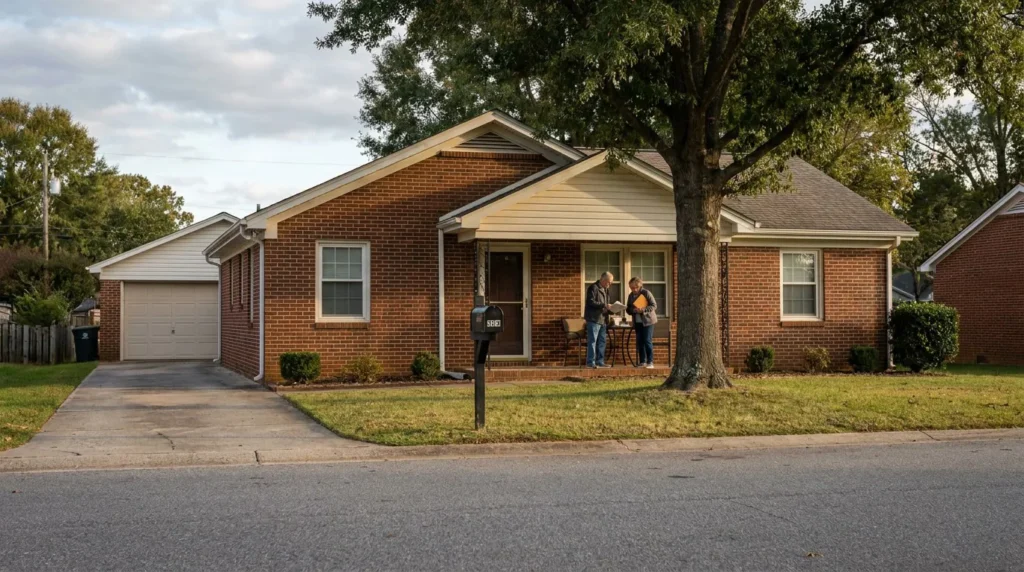
Understanding What Happens to Your Home and Savings After Medicaid
Key Takeaways: SC Medicaid estate recovery currently reaches only the probate estate. Federal law requires states to recover certain long-term care costs from a deceased Medicaid recipient’s probate estate and permits states to adopt an "expanded" definition reaching non-probate assets like jointly held property, life estates, and living trust assets. South Carolina has not adopted that expanded definition and instead limits recovery to its Probate Code definition. Recovery applies to beneficiaries 55 or older who received nursing facility or home and community-based services, starting through a probate court claim. Important protections include a $25,000 estate value threshold, a $500 Medicaid claims minimum, and deferrals or waivers for surviving spouses, minor or disabled children, and undue hardship. A will directs but does not avoid probate, while a properly funded living trust generally keeps assets outside South Carolina’s current recovery reach. Families should confirm current rules and remain mindful of Medicaid’s transfer look-back penalties.
Useful? Get our articles in your Google results.
Under South Carolina law, Medicaid estate recovery is currently limited to the probate estate, though federal law allows other states to reach further. Federal law requires every state to recover certain long-term care costs from a deceased Medicaid recipient’s estate. States may attempt recovery from non-probate assets under an "expanded" definition. South Carolina has not adopted that expanded definition; its statute defines the recoverable estate by reference to the state Probate Code, so recovery is currently limited to probate assets.
If you are caring for an aging parent or spouse and worried about the family home, you do not have to sort through these rules alone. The team at Sawyer & Associates helps families across South Carolina plan with clarity and compassion. Call us at 803-598-0082 or reach out through our contact page to talk through your situation.

What Estate Recovery Really Means for Fort Mill Families
Estate recovery is the process a state uses to seek repayment for certain Medicaid benefits after a recipient passes away. The program is not a penalty. Congress mandated recovery in 1993, and South Carolina recovers amounts for medical assistance paid after June 30, 1994. The statutory foundation draws from 42 U.S.C. § 1396p(b) and S.C. Code Ann. § 43-7-460(A) et seq.
Not everyone who receives Medicaid is subject to recovery. Recovery applies to a person 55 or older receiving nursing facility or home and community-based services, or a person of any age who was an inpatient in a nursing or long-term care facility at the time of death. Recovery also reaches associated hospital stays and prescription costs tied to that care.
💡 Pro Tip: The rules that govern a case are the ones in effect on the date of death, not the date Medicaid was approved. Probate laws differ by state.
How SC Medicaid Estate Recovery Works Through Probate Court
SC Medicaid estate recovery is administered through the South Carolina probate court. After a beneficiary dies, the state files a claim with the probate court to recover amounts paid by Medicaid for the deceased beneficiary’s medical care.
That claim is handled alongside other estate obligations. The Medicaid claim is similar to claims for funeral expenses, attorney’s fees, and taxes. You can review the state’s official overview at the SCDHHS estate recovery page.
Which Assets Are Considered "Probate" Assets
Probate assets are those that pass under a will or under state intestacy law, rather than automatically to someone else. Probate assets include those held in the deceased’s name or jointly owned as "tenants in common," where the other owner does not automatically inherit the deceased’s share.
Probate vs. Non-Probate: Where Recovery Can Reach
Whether recovery stops at probate depends on whether a state uses the standard or expanded definition. Under the expanded approach that federal law permits, recovery can extend to assets that skip probate. In states that adopt it, expanded estate recovery includes jointly held assets other than "tenants in common," life estates, and assets in a living trust. South Carolina currently uses the standard probate-only definition, so these non-probate assets generally fall outside its recovery reach today.
Here is a simple comparison to keep the categories straight:
| Asset Type | Generally a Probate Asset? | Potentially Reachable Under Expanded Recovery? |
|---|---|---|
| Property solely in the deceased’s name | Yes | Yes |
| Tenants-in-common share | Yes | Yes |
| Joint property with survivorship | No | Possibly |
| Life estate interest | No | Possibly |
| Assets in a living trust | No | Possibly |
Because a state’s definition can change and the law in effect on the date of death controls, confirm current rules rather than assume any asset’s treatment is permanent. National resources like the overview of the Medicaid Estate Recovery Program can help you understand the framework, but state-specific guidance is essential. This is where working with a knowledgeable sc medicaid estate recovery lawyer can prevent costly assumptions.
Protections, Thresholds, and Your Family Home
South Carolina builds in several protections that limit when and how recovery happens. The assets of the estate must be valued at more than $25,000 and the Medicaid claims paid must exceed $500 before recovery is pursued.
Certain surviving family members trigger a delay or waiver of recovery. Recovery is deferred if the recipient is survived by a spouse or by a child who is under 21, blind, or disabled, and it may be waived for undue hardship. When deferred for a surviving spouse, recovery may be made only after that spouse’s death.
Many families worry about losing the home. The Medicaid claim may not require selling the decedent’s home and land if other assets are available, and the state is not interested in taking title to anyone’s home. Still, the claim must generally be satisfied for the estate to close, so planning ahead remains important. To understand how coverage and recovery interact over time, our overview of Medicaid continuation coverage offers helpful context.
Common Situations Where Families Get Surprised
Most surprises come from misunderstanding how title and beneficiary designations actually work:
- Assuming a joint bank account is automatically safe without confirming how it is titled.
- Believing a life estate’s treatment is fixed, when the rules that apply are those in effect on the date of death.
- Thinking a will keeps property out of probate, which is one of the most common misconceptions.
Why a Will Alone Won’t Keep You Out of Probate
A will does not avoid probate. It directs how probate assets are distributed. If property passes through your will, it passes through probate court, where the state files its Medicaid claim. A will simply names who receives what after the process runs its course.
A revocable living trust, by contrast, can allow assets to pass outside of probate. A properly funded revocable living trust generally moves assets out of the probate pipeline. Because South Carolina currently limits recovery to the probate estate, assets in a properly funded revocable living trust generally fall outside its recovery reach today. Even so, no single document is a guaranteed shield, improper transfers can trigger Medicaid’s look-back penalties, and a state may change its definition, which is why coordinated planning matters.
Planning Ahead With Medicaid Crisis Planning in Fort Mill
Thoughtful planning is most powerful before a crisis, though options may exist even when care is urgently needed. Medicaid crisis planning involves lawful strategies to preserve assets when a loved one needs nursing home care. Timing of transfers, spousal protections, and properly structured tools all require careful documentation. Outcomes depend on your specific circumstances.
Fort Mill families benefit from guidance that reflects both federal mandates and South Carolina’s particular choices. A knowledgeable Medicaid attorney in Fort Mill can help you weigh probate avoidance strategies, evaluate a revocable living trust, and understand how estate recovery rules may apply to your family.
Frequently Asked Questions
1. Does SC Medicaid estate recovery only apply to probate assets?
Generally, yes, under current South Carolina law. Federal law requires recovery from the probate estate and gives states the option to adopt an expanded definition that reaches certain non-probate assets including jointly held property, life estates, and living trust assets. South Carolina has not adopted it, so recovery currently applies to probate assets.
2. Can the state take my parent’s home in Fort Mill?
The state seeks repayment of a debt, not ownership of the home. Recovery may not require selling the home if other assets are available. Whether a sale becomes necessary depends on the estate’s other assets.
3. Are there dollar limits before recovery applies?
Yes. The estate must be valued at more than $25,000 and Medicaid claims paid must exceed $500 for recovery to proceed. Current amounts should be confirmed with counsel.
4. Who is actually subject to estate recovery in South Carolina?
Recovery targets specific beneficiaries, not everyone on Medicaid. It applies to a person 55 or older who received nursing facility or home and community-based services, or a person of any age who was an inpatient in a long-term care facility at the time of death.
5. Does having a will protect my home from probate and recovery?
No. A will governs how probate assets are distributed but does not remove them from probate. A properly funded revocable living trust is generally the tool used for probate avoidance, and because South Carolina currently limits recovery to the probate estate, such trust assets generally fall outside its recovery reach today.
Bringing It All Together for Peace of Mind
In short, SC Medicaid estate recovery is currently limited to the probate estate. Although federal law permits states to adopt an expanded definition reaching jointly held property, life estates, and living trust assets, South Carolina has not done so, and its program operates within the framework of 42 U.S.C. § 1396p(b) and S.C. Code Ann. § 43-7-460(A) et seq. Thresholds, spousal protections, and hardship waivers exist, and careful planning can help preserve what matters most.
You do not have to navigate these estate recovery rules on your own. The compassionate team at Sawyer & Associates offers a free 30-minute consultation and a veteran discount to help Fort Mill families plan with confidence. Call 803-598-0082 or schedule your consultation today to protect your home, your savings, and your peace of mind.
Have questions about your situation? Talk with our South Carolina estate planning and probate attorneys.
Related Reading
This article is part of our guidance on Medicaid Crisis Planning. You may also find these helpful:
- What Assets Are Safe From SC Medicaid Estate Recovery in Fort Mill?
- South Carolina Only Recovers From Estates Valued Above $25,000 for Medicaid
- What Is a Half-a-Loaf Strategy for Medicaid in Fort Mill?
Follow Sawyer & Associates in Google
Add us as a preferred source and our probate, estate planning and elder law articles surface higher when you search these questions in North Carolina, South Carolina and Tennessee.