
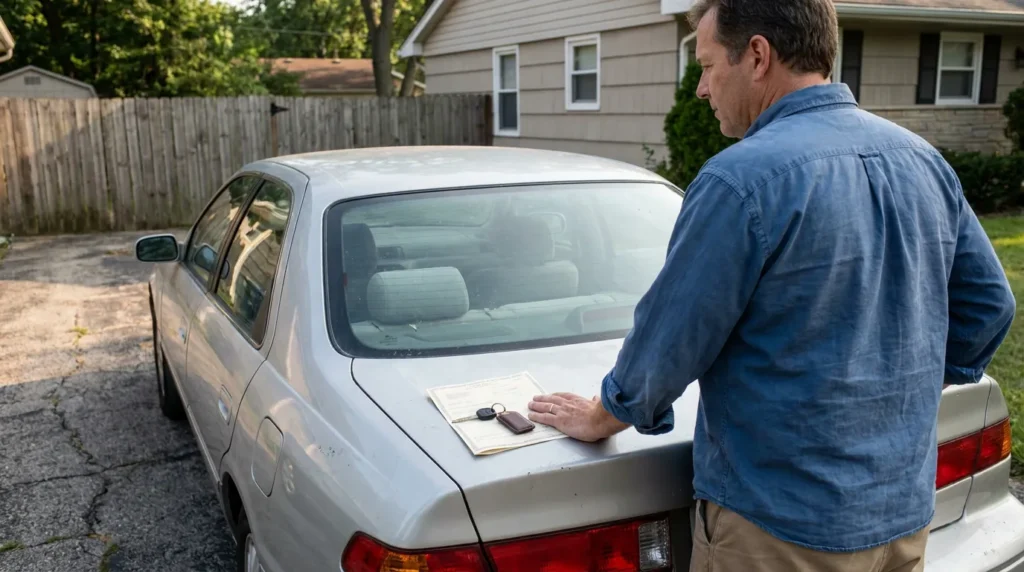
Settling a Modest Estate in South Carolina Without Full Probate
Key Takeaways: South Carolina’s Form 420ES, the Affidavit for Collection of Personal Property, may let a qualifying successor collect bank accounts, tangible items, and certain securities without opening a full estate administration. To use it, the probate estate generally must fall under the current statutory cap of forty-five thousand dollars net of liens, at least thirty days must have passed since death, no personal representative application may be pending or granted in any jurisdiction, and the affiant must be a claiming successor entitled to the property, a category that includes a person who paid reasonable funeral expenses. The probate judge of the county of the decedent’s domicile must approve and countersign the form before banks and transfer agents are legally compelled to release property. Real estate, along with assets passing by beneficiary designation or joint survivorship, generally falls outside the affidavit’s reach. Most rejections stem from avoidable errors such as filing too early, omitting a statutory recital, valuing assets as of the filing date instead of the date of death, or filing in the wrong county. Families facing real property, creditor claims, or multi-state assets may be better served by formal administration, and an attorney review before filing can save far more time than fixing a defective one.
Useful? Get our articles in your Google results.
When a loved one leaves a modest amount of personal property, South Carolina law offers a shorter path than formal estate administration. Form 420ES may allow a qualifying successor to collect bank accounts, tangible items, and certain securities without opening a full estate. The form is short, but the eligibility rules behind it are precise, and the probate court will generally not accept an affidavit missing a required statement.
If you’re holding a stack of paperwork and wondering whether your family qualifies, you don’t have to sort it out alone. The probate team at Sawyer & Associates guides families across Fort Mill, Lake Wylie, Columbia, Charleston, and Greenville through small estate filings every year. Call (803) 274-1095 or reach out to our team to schedule a free 30-minute consultation, and ask about our veteran discount.
What Form 420ES Actually Does
Form 420ES is South Carolina’s official vehicle for collecting a decedent’s personal property by affidavit instead of through appointed administration. Under S.C. Code Ann. § 62-3-1201(a), thirty days after death, anyone holding tangible personal property or an instrument evidencing a debt, obligation, stock, or chose in action belonging to the decedent must pay or deliver that property to a claiming successor upon presentation of a proper affidavit meeting every statutory requirement. That duty gives the form its power with banks and other holders. The statute doesn’t extinguish anyone’s rights, though: a person who receives property by affidavit remains answerable to any later-appointed personal representative or to any other person with a superior claim.
The affidavit may reach further than most families expect. Under § 62-3-1201(b), a transfer agent of any security shall change registered ownership from the decedent to the successor upon presentation of a conforming affidavit, meaning certain stock holdings may be retitled through this process, subject to the transfer agent’s own documentation requirements.
Property the Affidavit Generally Does Not Reach
Real estate is the most common surprise. The affidavit procedure under Part 12 of Article 3 addresses personal property only, so a house, land, or titled real property interest generally falls outside its scope. The form itself asks the affiant to confirm the probate estate includes no interest in real property. Assets with valid beneficiary designations or joint survivorship features typically pass outside probate on their own and generally aren’t collected with Form 420ES.
Who Qualifies to Use a Small Estate Affidavit South Carolina Families Can Rely On
Eligibility generally turns on several statutory conditions, and all typically must be satisfied before a probate judge will countersign. The governing rules appear in Article 3 of the state’s South Carolina Probate Code.
- Value cap. § 62-3-1201(a)(1) requires a statement that the entire probate estate, wherever located and less liens, does not exceed the statutory ceiling, currently forty-five thousand dollars.
- Waiting period. § 62-3-1201(a)(2) requires a statement that thirty days have elapsed since death.
- No competing administration. § 62-3-1201(a)(3) requires a statement that no personal representative application is pending or granted in any jurisdiction.
- Successor status. Under § 62-3-1201(a)(4), the affiant must state the claiming successor is entitled to the property, whether under the will or intestacy. The statute treats a person who paid reasonable funeral expenses as a claiming successor.
The value cap moves over time, and using an outdated figure is a common reason an affidavit gets returned. Older county packets still show a twenty-five thousand dollar figure, so families should confirm the current amount, since South Carolina raised the small estate threshold in recent years. Whether an estate fits under the cap can be fact-dependent, especially where debts, liens, or hard-to-value property are involved. The cap is measured against the entire probate estate, not merely the single account you hope to collect.
How to Complete 420ES Step by Step
The form asks for identifying information about the decedent, a sworn valuation of the estate, and a listing of the property to be collected. Work through it in the order the statute requires, since each numbered recital generally corresponds to a statutory element.
Gathering Documents Before You Write Anything
Start with a certified death certificate, the original will if one exists, and account statements or asset records dated as close to the date of death as possible. You’ll also need documentation of any debts secured against personal property, since liens reduce the value used for the threshold calculation. Assemble contact information for every institution holding property, since each may request its own certified copy of the approved affidavit.
Valuing the Estate Honestly
The valuation is sworn testimony, not a casual estimate. List each item with a good-faith date-of-death value, subtract liens, and total the result. If the number lands close to the statutory ceiling, an attorney review is worth the time, since an affidavit filed on an estate exceeding the cap may need to be unwound and replaced with formal administration.
Signing, Approval, and Filing
This is the step families most often get wrong: Form 420ES is generally not simply filed like a letter. The affidavit is signed under oath before a notary or other authorized officer. Under § 62-3-1201(a)(5), it must then be approved and countersigned by the probate judge of the county of the decedent’s domicile, or, if the decedent wasn’t domiciled in this state, the county where the property is located, and only upon the judge’s satisfaction that the successor is entitled to the property. Section 62-3-1201(a)(6) then requires filing the affidavit in the probate court.
Only after judicial approval and filing does the affidavit compel a bank or transfer agent to release property, and the statute protects holders who rely on a valid affidavit from liability to the estate. County probate staff generally provide guidance on supporting documents and fees, and many counties, including Charleston, publish probate forms and instructions directing filers to the state-approved versions.
💡 Pro Tip: Request several certified copies of the approved affidavit at filing. Banks, credit unions, and transfer agents rarely accept photocopies, and returning to the courthouse later can cost weeks.
Comparing the Affidavit Path to Formal Administration
| Consideration | Form 420ES Affidavit | Formal Administration |
|---|---|---|
| Estate value | Must fall under the statutory cap, net of liens | No cap |
| Waiting period | At least 30 days after death | Generally may be opened sooner |
| Court involvement | Probate judge approves and countersigns | Personal representative appointed and supervised |
| Property covered | Personal property, debts, certain securities | Personal and real property |
| Typical use | Small, uncontested estates | Larger estates, real estate, creditor issues |
The affidavit is designed for genuinely small, uncontested estates, and the statutory recitals make that intent plain. If a personal representative petition is already pending anywhere, the affidavit route generally closes. Families dealing with real property, meaningful creditor claims, or multi-state assets are generally better served by a formal proceeding, and our small estate affidavit South Carolina lawyer team can help you evaluate which path fits. South Carolina also provides a separate summary administration procedure under § 62-3-1203, which may fit facts the collection affidavit can’t.
Why a Will Does Not Spare Your Family This Process
One of the most persistent misunderstandings in estate planning is the belief that having a will keeps an estate out of probate. A will is generally a set of instructions to the probate court, not a bypass around it. Probate assets controlled by a will generally require court involvement before they can be retitled or distributed, which is exactly why Form 420ES exists as a shortcut for the smallest estates. Assets that pass by beneficiary designation, survivorship, or trust aren’t controlled by the will and generally avoid that step.
A properly funded revocable living trust may allow assets to pass outside probate, and that general principle holds true in each of the five states our firm serves, though details differ by state. Assets titled in the trust’s name during life generally transfer to beneficiaries under the trust’s terms without court supervision. Planning of this kind also interacts with long-term care and Medicaid crisis planning, where eligibility rules differ meaningfully by state and change over time.
💡 Pro Tip: If you’re administering an estate in more than one state, confirm early which state was the decedent’s domicile. That determination usually controls which county’s probate court has authority to approve a collection affidavit.
Practical Pitfalls That Delay SC Probate Court Filing
Most rejected affidavits fail for avoidable reasons rather than complicated legal ones. Institutions holding the property also have internal compliance policies that operate independently of the probate court’s approval.
- Filing before the thirty-day waiting period has fully elapsed
- Omitting a required statutory recital from the form
- Valuing assets as of the filing date rather than the date of death
- Submitting to the wrong county’s probate court
- Overlooking a pending administration in another state
Outcomes depend heavily on the specific facts of each estate, including how assets were titled and what obligations the decedent left behind. Where the answer is unclear, a conversation with a probate attorney before filing generally costs far less time than correcting a defective filing afterward.
Frequently Asked Questions
1. How long must we wait before using Form 420ES?
At least thirty days after death. § 62-3-1201(a)(2) requires the affidavit to state that thirty days have elapsed, so filing earlier will generally result in rejection.
2. Can the affidavit be used if someone already applied to be personal representative?
Generally no. § 62-3-1201(a)(3) requires a sworn statement that no application for a personal representative is pending or has been granted in any jurisdiction, including other states.
3. Does Form 420ES transfer stocks and bonds?
It can. Under § 62-3-1201(b), a transfer agent shall change registered ownership from the decedent to the successor upon presentation of a conforming affidavit, though the agent may request additional documentation.
4. Who counts as an interested person in the estate?
The answer depends on context. For estate tax apportionment purposes, § 62-3-916(a)(3) defines persons interested in the estate as those entitled to receive, or who have received, property from a decedent, including a personal representative or trustee. That definition doesn’t control who may sign a collection affidavit, which is governed by § 62-3-1201. Anyone collecting property by affidavit should consider potential tax consequences with a qualified advisor.
5. What happens if the estate turns out to exceed the threshold?
The affidavit procedure would generally no longer apply, and the family may need to open a formal administration. Under § 62-3-1202, a person to whom property was paid or delivered remains accountable for it to any appointed personal representative or to any person with a superior right.
Moving Forward With Confidence
Form 420ES may offer real relief to South Carolina families whose loved one left a modest estate, but it generally works only when every statutory condition under § 62-3-1201 is satisfied, the correct probate judge approves and countersigns it, and the affidavit is filed in the proper probate court. Careful valuation, accurate recitals, and attention to the thirty-day waiting period can help keep the process moving. When the estate includes real property, out-of-state assets, or creditor questions, a formal administration may serve the family better.
You shouldn’t have to learn probate procedure during the hardest month of your life. Sawyer & Associates helps families throughout South Carolina, across North Carolina and Tennessee complete estate paperwork correctly the first time. Call (803) 274-1095, visit our firm’s website, or request your free consultation today, and be sure to ask about our veteran discount.
Have questions about your situation? Talk with our South Carolina estate planning and probate attorneys.
Disclaimer: This content is for informational purposes only and is not legal advice. Every case is unique, and results may vary. Consult an attorney about your specific circumstances.
Follow Sawyer & Associates in Google
Add us as a preferred source and our probate, estate planning and elder law articles surface higher when you search these questions in North Carolina, South Carolina and Tennessee.