
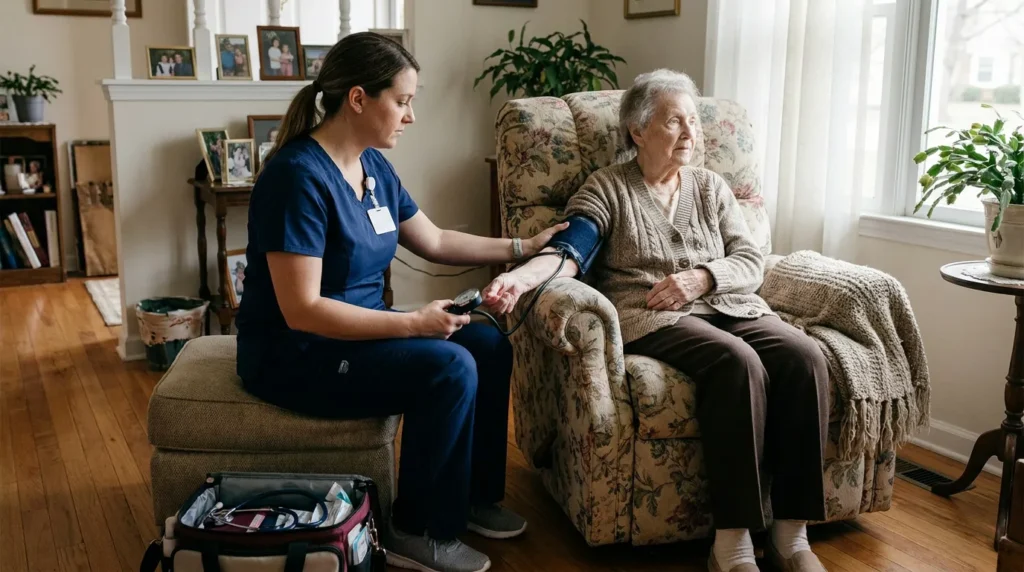
Staying Home Instead of Moving to a Nursing Facility: A Look at North Carolina’s CAP/DA Program
Key Takeaways: The Community Alternatives Program for Disabled Adults (CAP/DA) is North Carolina’s Section 1915(c) Medicaid waiver funding in-home and community-based care for adults 18+ who would otherwise need nursing facility placement. Qualifying generally requires a medical assessment showing nursing facility level of care deliverable safely at home, financial eligibility under Medicaid’s asset, income, and five-year transfer look-back rules, and assignment of an available waiver slot. Because the waiver is not an entitlement and slots are capped, approved applicants may still be waitlisted, leading some families to pursue nursing facility Medicaid simultaneously. Waiver services supplement rather than replace caregiving, covering personal care aides, respite, home modifications, meal delivery, and care coordination. Managed care transformation kept CAP waiver services carved out of Standard Plans, so coordination runs through the CAP/DA case management entity rather than a general Medicaid line. Documentation delays, untimely transfers, outdated powers of attorney, and estate recovery are common pitfalls, making the sequence of planning steps critical.
Useful? Get our articles in your Google results.
CAP/DA is North Carolina’s Medicaid waiver paying for in-home and community-based care for adults who would otherwise need nursing facility placement. Federal law allows states to “waive” certain Medicaid rules so long-term care dollars can follow a person home rather than into an institution. Eligibility generally depends on financial qualification, a medical determination of nursing facility level of care, being 18 or older, and assignment of a waiver slot, which may not be immediately available in the applicant’s county.
If your family is weighing in-home care against a nursing home admission, the timing of your Medicaid application can matter a great deal. The team at Sawyer & Associates helps families across Charlotte and the surrounding region understand how waiver programs fit into a larger asset protection strategy. Call (803) 274-1095 or schedule your free consultation to talk through your situation before decisions get made for you.

Where CAP/DA Comes From and Why It Exists
CAP/DA is authorized under Section 1915(c) of the Social Security Act, which permits states to offer home and community-based services as an alternative to institutional care. Without that authority, Medicaid long-term care funding would largely be limited to nursing facilities. Federal home and community-based services waivers allow states to design programs around the individual instead of the building.
Federal guidance also emphasizes meaningful consumer participation in service planning. That principle shapes CAP/DA’s person-centered planning process, where the beneficiary and family help decide what services are delivered, and underlies the consumer-directed option allowing participants to select and direct certain personal assistance workers.
The Practical Difference Between Waiver Care and Facility Care
Waiver services are designed to supplement existing formal and informal supports, not replicate around-the-clock institutional staffing. A CAP/DA plan of care may include personal care aides, adult day health, respite for an unpaid caregiver, home modifications like ramps or grab bars, meal delivery, personal emergency response systems, and case management. Program rules generally assume family, friends, or volunteers are available when paid supports are not, so families expecting the waiver to fully replace a caregiver are often surprised by the authorized hours.
| Consideration | CAP/DA Waiver | Nursing Facility Medicaid |
|---|---|---|
| Setting | Private home or community | Licensed facility |
| Level of care finding | Nursing facility level required | Nursing facility level required |
| Availability | Slot-limited; waitlists are county-specific | Not slot-limited |
| Services | Defined plan of care, limited hours | Comprehensive facility care |
Understanding CAP/DA Waiver North Carolina Eligibility
Eligibility rests on separate medical, financial, and administrative tests, and an applicant typically must satisfy all of them. Meeting one does not carry the others. Because each test is evaluated by a different reviewer, applications may stall when one piece of documentation is incomplete.
Medical and Functional Criteria
The applicant generally must be assessed as needing a nursing facility level of care while being able to be served safely at home, and the need must generally arise from a physical disability or chronic medical condition. Assessors look at activities of daily living such as bathing, dressing, transferring, toileting, and eating, along with cognitive status, behavioral risks, and medication management. A diagnosis alone, including dementia, does not by itself establish the level of care. A second finding is required: that the home environment and available informal supports can keep the person safe with the services the plan authorizes. Level of care is reassessed periodically, and a change in condition can affect continued participation.
Financial Criteria and the Look-Back Period
Financial qualification generally follows North Carolina’s Medicaid rules for long-term care, including countable asset limits, income treatment, and the federal 60-month look-back on transfers. North Carolina sets its long-term care income standard by reference to the federal poverty level rather than the 300% SSI figure many other states use, and its non-MAGI limits are typically updated in April rather than January. Gifts, property transfers, and even well-intentioned help to a grandchild within the look-back window may generate a transfer penalty, subject to exceptions such as certain transfers to a spouse or disabled child, and to rebuttal where the transfer was made exclusively for a purpose other than qualifying for Medicaid. Figures change periodically, so no family should rely on a number found online without confirming it with counsel. The Medicaid rules actions filings published by NCDHHS reflect how program definitions evolve over time.
💡 Pro Tip: Ask the applicant’s bank for five years of statements early. Reconstructing old records is often the slowest part of a Medicaid crisis application, and delays can cost months of coverage.
Slots, Waiting Lists, and County Administration
CAP/DA is not an entitlement; it operates under a federally approved cap on participant slots, meaning a qualified applicant may be placed on a waiting list. Waiting lists are county-specific, so one county may have an opening while a neighboring county does not, and priority rules apply to certain groups, such as people transitioning out of a nursing facility. Nursing facility Medicaid is generally not slot-capped, so some applicants pursue both paths while waiting, and may transition later if a waiver slot opens.
Who Qualifies for CAP/DA When Managed Care Is Part of the Picture
North Carolina’s Medicaid Transformation moved much of the state’s Medicaid population into managed care, but long-term services and supports were treated differently. Under the state’s transition plan, CAP waiver services remained carved out of Standard Plan coverage, staying with NC Medicaid Direct or Tailored Plan administration. Managed care arrangements continue to evolve, so families should confirm current rules. Practically, the entity coordinating waiver services may not be the same entity handling other medical coverage.
Care coordination for a waiver beneficiary generally runs through the CAP/DA case management entity in the county of residence rather than a general Medicaid customer service line. Knowing which office holds the file can shorten a delay considerably.
Common Obstacles Families Run Into
Most CAP/DA problems trace back to documentation, timing, or a mismatch between expectations and what the plan of care actually authorizes. Recognizing these early tends to produce better outcomes than appealing later. Common issues include:
- Submitting a Medicaid application before addressing potentially disqualifying assets or transfers
- Assuming a spouse’s income and resources are automatically counted or protected, when spousal impoverishment rules involve their own calculations
- Believing a power of attorney is broad enough to authorize Medicaid planning transfers, when many older documents may not be
- Waiting for a slot without a backup plan for interim care
- Overlooking estate recovery, which may apply to waiver services as well as facility care
Estate recovery deserves particular attention because it is often where the family home comes into play. Under federal law, North Carolina is generally required to seek recovery from the probate estates of certain deceased Medicaid beneficiaries who received long-term care services, subject to deferrals for a surviving spouse or certain children and to hardship waivers. A common misconception is that a will avoids probate; it generally does not. A will typically directs how probate-administered assets are distributed, while a properly funded revocable living trust may allow assets to pass outside probate in North Carolina and the other states where the firm serves clients. A revocable trust, however, generally does not shield assets from Medicaid eligibility counting.
How Crisis Planning and Waiver Applications Fit Together
Crisis planning is what happens when care is needed now and no advance planning was done. Lawful strategies may include spousal transfers, properly structured promissory notes or annuities that satisfy federal requirements, caregiver agreements, and correcting title problems before an application is filed. Families exploring Medicaid crisis planning strategies often discover that options may remain available even after a hospitalization or sudden decline. Outcomes depend heavily on the specific facts and on how the county agency applies state policy, so general rules should not be treated as predictions.
💡 Pro Tip: Keep the level-of-care assessment and the financial application moving on parallel tracks. Sequencing them one after the other is a frequent and avoidable source of delay.
Frequently Asked Questions
1. Can someone receive CAP/DA services and still own a home?
Generally yes. A primary residence is often treated as an exempt asset under certain conditions, such as when the beneficiary lives there or documents intent to return, when a spouse or dependent relative lives there, and when equity stays within the federal home equity limit. Exemption for eligibility is not the same as protection from estate recovery, which is a separate analysis.
2. What happens if the applicant’s income is too high?
Income that exceeds the applicable limit does not necessarily end the inquiry. North Carolina does not use qualified income trusts; instead, it generally applies a medically needy “deductible,” or spend-down, under which documented medical expenses can be applied toward the income limit. Other states use different tools, so the approach depends on where the applicant lives. This is fact-specific and should be reviewed with an attorney before any account is opened.
3. How long does approval usually take?
Timelines vary by county, by the completeness of the file, and by slot availability. Medical assessment, financial determination, and slot assignment each generally move on their own schedule, and a waiting list can extend the process well beyond standard Medicaid processing timeframes. Families in Charlotte and surrounding counties may want to plan for the process to take longer than a standard Medicaid application.
4. Does a CAP/DA denial end the matter?
Not necessarily. Applicants generally have appeal rights through the state’s Medicaid appeals process, typically a hearing before the Office of Administrative Hearings. Appeals are subject to filing deadlines that may be interpreted strictly, and an administrative appeal is generally different from a civil lawsuit. Placement on a waiting list because no slot is available is generally handled differently from a denial on medical or financial grounds. Acting quickly may help preserve more options.
5. Do veterans have additional considerations?
Often, yes. VA benefits, including Aid and Attendance, may interact with Medicaid eligibility in ways that require coordination, and the two systems use different income, asset, and transfer rules. Sawyer & Associates offers a veteran discount and can review how both benefit systems may work together.
Bringing the Pieces Together for Your Family
CAP/DA gives many North Carolina families a genuine alternative to nursing facility placement, but qualifying generally requires clearing a medical level-of-care finding, satisfying strict financial rules, and being assigned an available slot. Because the waiver sits inside a larger Medicaid structure that has shifted substantially in recent years, and because asset transfers made today can affect eligibility five years from now, the order in which steps are taken can significantly affect the result. Thoughtful planning may help protect both the care plan and the family’s savings.
You do not have to figure out CAP/DA waiver North Carolina eligibility on your own. Sawyer & Associates offers guidance on CAP/DA waiver North Carolina eligibility lawyer matters for families throughout North Carolina, South Carolina and Tennessee. Call (803) 274-1095, visit Sawyer & Associates online, or request your free 30-minute consultation to get clear answers about your next step.
Disclaimer: This content is for informational purposes only and is not legal advice. Every case is unique, and results may vary. Consult an attorney about your specific circumstances.
Follow Sawyer & Associates in Google
Add us as a preferred source and our probate, estate planning and elder law articles surface higher when you search these questions in North Carolina, South Carolina and Tennessee.