
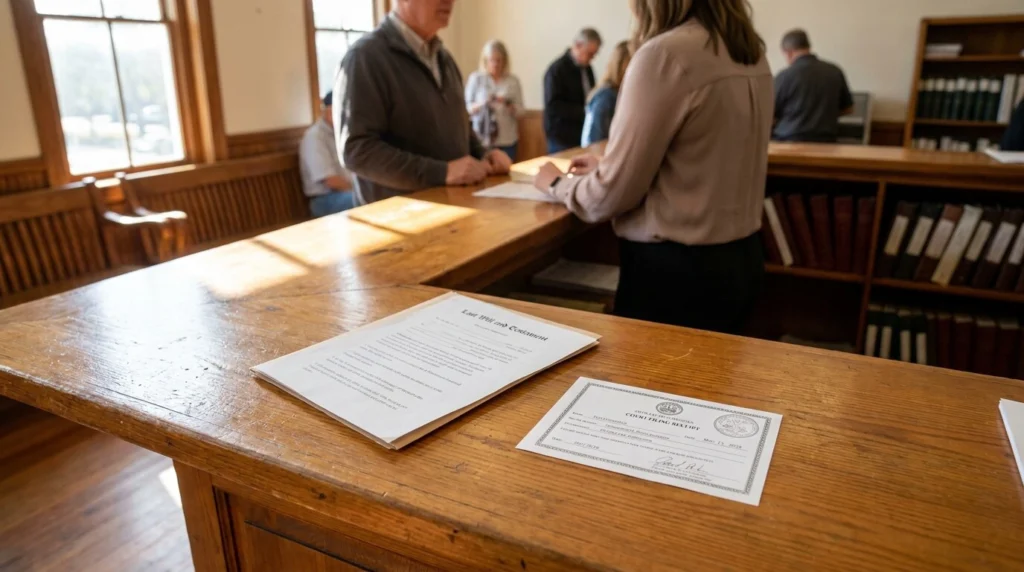
Article 2 of Title 62 covers “Intestate Succession and Wills,” establishing the legal framework for wills in South Carolina, but a will directs asset distribution without eliminating the probate court’s role in administering the estate.
If your goal is to keep your family out of court, a will alone will not get you there.
If you are sorting through these questions for your own family near Lake Wylie, Fort Mill, or anywhere in the region, the team at Sawyer & Associates is here to help. You can call us at 803-619-0050 or reach out through our contact page to schedule a free 30-minute consultation and get clear answers tailored to your situation.
Why a Will Still Goes Through Probate Court
Probate is the court-supervised process of validating a will and administering an estate. In South Carolina, this process is not optional simply because you have a will.
South Carolina’s probate process is governed by Title 62 of the SC Code of Laws, known as the South Carolina Probate Code, and Article 3 specifically covers “Probate of Wills and Administration,” confirming that wills in South Carolina go through a probate process.
In other words, the will is the very document the court reviews, not a shortcut around it.
Even uncontested estates require court involvement. Many people assume that if no one is fighting, probate can be skipped.
South Carolina probate law provides for both informal and formal probate proceedings, meaning even uncontested wills require court involvement, though very small estates may qualify for a simplified summary procedure.
Title 62, Article 3 governs the probate of wills and administration, including Section 62-3-301 on applications for informal probate and Section 62-3-302 on informal probate and the duty of the court.
Informal probate is generally faster and lighter on paperwork, but it is still a court process subject to specific procedural requirements.
💡 Pro Tip: Before assuming your current documents are “set,” ask whether your assets are titled to flow through your will or around it. The way an account or deed is titled often matters more than what your will says.
What Makes a Will Valid Under South Carolina Probate Law
South Carolina law sets specific formalities a will must meet to be valid. Getting these details right is essential, because a defective will can complicate administration.
Under South Carolina law, a valid will must generally meet three requirements: it must be in writing, signed by the testator or by another person at the testator’s direction and in their presence, and signed by at least two witnesses who each witnessed either the signing or the testator’s acknowledgment of the signature or of the will.
You can review the full text of the execution statute, South Carolina’s will requirements under § 62-2-502, to see these formalities in detail.
Meeting these requirements makes a will valid, but it does not change where the will goes.
A will that meets these execution requirements is valid in South Carolina, but the statute itself is part of Title 62, meaning wills are instruments that go through the probate process, not around it.
So a perfectly drafted, properly witnessed will still lands in probate court.
Provisions That Can Override Your Will
Certain statutory protections can change how your will is applied. South Carolina law builds in safeguards for close family members who may have been left out unintentionally.
Article 2 of Title 62 covers intestate succession and wills, including provisions for omitted spouses under Section 62-2-301 and pretermitted children under Section 62-2-302, which can override a will’s provisions.
These rules generally apply in narrow circumstances, and courts interpret them according to the specific facts of each estate, so outcomes can vary.
The Estate Planning Attorney Lake Wylie SC Families Turn To for Probate Avoidance
Avoiding probate generally requires tools that operate outside the will entirely. South Carolina law expressly recognizes that some assets pass without going through probate.
South Carolina law provides for “Nonprobate Transfers” under Article 6 of Title 62, indicating the legislature recognizes specific mechanisms to transfer assets outside of probate, distinct from wills.
These are the building blocks of a true probate-avoidance strategy.
Common nonprobate mechanisms include several familiar tools. When properly set up and aligned, these can move assets directly to your chosen people. Common examples include:
- Revocable living trusts that hold and distribute assets outside court
- Beneficiary designations on retirement accounts and life insurance
- Payable-on-death and transfer-on-death account registrations
- Jointly titled property with survivorship rights
Aligning these designations with your overall plan is where many families slip up. A trust or beneficiary form that conflicts with your will can create confusion and unintended results. This is one reason working with a knowledgeable estate planning attorney Lake Wylie SC residents trust can help keep your documents working together rather than against each other.
💡 Pro Tip: Review your beneficiary designations after major life events like a marriage, divorce, or the birth of a child. These forms generally control regardless of what your will says.
How a Revocable Living Trust Helps Avoid Probate
A revocable living trust is one of the most reliable ways to avoid probate in South Carolina. Because the trust, rather than you individually, holds title to your assets, those assets are not part of the probate estate at death.
Article 7 establishes the South Carolina Trust Code, providing the legal basis for trusts as an alternative estate planning tool that can help avoid probate.
The South Carolina Trust Code is codified under Article 7 of Title 62, providing a legal framework for trusts as an alternative estate planning tool.
A revocable living trust also offers flexibility while you are alive. You generally keep control of the assets, can amend or revoke the trust, and can plan for incapacity. For families who own property in more than one state, a properly funded revocable living trust can be especially valuable because it can help avoid separate probate proceedings in each state. A revocable living trust, when properly funded, allows assets to pass outside of probate in every state our firm serves, including North Carolina and Tennessee.
Will vs Trust in South Carolina: A Quick Comparison
Understanding the difference between these documents helps you choose the right plan. The chart below highlights how they generally function.
| Feature | Last Will and Testament | Revocable Living Trust |
|---|---|---|
| Avoids probate | No | Generally yes, if properly funded |
| Effective during incapacity | No | Yes |
| Becomes public record | Generally yes | Usually private |
| Court supervision | Required | Usually not required |
A trust is not automatically the right answer for everyone. The best choice depends on your assets, family situation, and goals. A will may still play an important supporting role, often as a “pour-over” will that works alongside a trust.
💡 Pro Tip: A trust only avoids probate for the assets actually transferred into it. An unfunded trust is one of the most common and costly mistakes we see.
Trusts, Incapacity, and Long-Term Care Planning
Estate planning is about more than what happens after death. It also prepares for the possibility that you become unable to manage your own affairs.
The South Carolina Probate Code is codified under Title 62, which governs wills, trusts, guardianships, conservatorships, and estates, including Article 8, the SC Uniform Power of Attorney Act.
You can explore the broader code through the South Carolina statehouse code library to see how these pieces fit together.
Medicaid crisis planning is a related concern for many older families. When a loved one needs nursing home care, lawful strategies may help protect the family home and lifetime savings. These rules vary significantly by state, and eligibility figures change, so any planning should be reviewed with current rules in mind. We encourage readers to consult an attorney before relying on general information, and our estate planning blog offers more guidance on these topics.
💡 Pro Tip: Medicaid planning generally works best when started early. Crisis planning is still possible later, but options can narrow as care needs become urgent.
Frequently Asked Questions
1. Does having a will mean my family avoids probate in South Carolina?
No. A will is the document the probate court uses to administer your estate, so it generally guides probate rather than avoiding it. Probate avoidance typically requires trusts or properly aligned nonprobate transfers.
2. What is the difference between informal and formal probate?
Both are court processes, but they differ in complexity. Informal probate is generally simpler and faster, while formal probate involves more court oversight. The appropriate path depends on the specific facts of the estate.
3. Is a revocable living trust better than a will?
It depends on your goals. A trust can help avoid probate and plan for incapacity, while a will alone cannot. Many plans use both documents together, and the right combination varies by family.
4. Do I still need a will if I have a trust?
Generally yes. A pour-over will can capture assets you did not transfer into your trust and name guardians for minor children. Without one, those overlooked assets may still pass through probate.
5. Can a trust help if I own property in more than one state?
Often, yes. A properly funded revocable living trust can help avoid separate probate proceedings in multiple states. This can be especially helpful for families with homes or accounts across state lines.
Building a Plan That Truly Avoids Probate
The bottom line is that a will and a trust serve very different purposes. A will ensures your wishes are recorded and respected, but it still passes through the probate court under South Carolina law. To genuinely avoid probate, most families rely on a revocable living trust, aligned beneficiary designations, and other nonprobate tools working together. Because every estate is different, outcomes depend on your specific facts, and consulting an attorney is the best way to build a plan that fits your life.
When you are ready to protect your family and your legacy, Sawyer & Associates is here to guide you with clear, compassionate planning. Call us today at 803-619-0050 or schedule your free consultation online, and ask about our veteran discount. Taking the first step now can give your loved ones peace of mind for years to come.
Related Reading
This article is part of our guidance on Probate and Estate Administration. You may also find these helpful:
- Avoid Probate in South Carolina – Strategies You Need to Know
- What Is Ancillary Probate in South Carolina for Out-of-State Property Owners?
- What Is a Deed of Distribution in South Carolina Probate?
Follow Sawyer & Associates in Google
Add us as a preferred source and our probate, estate planning and elder law articles surface higher when you search these questions in North Carolina, South Carolina and Tennessee.