
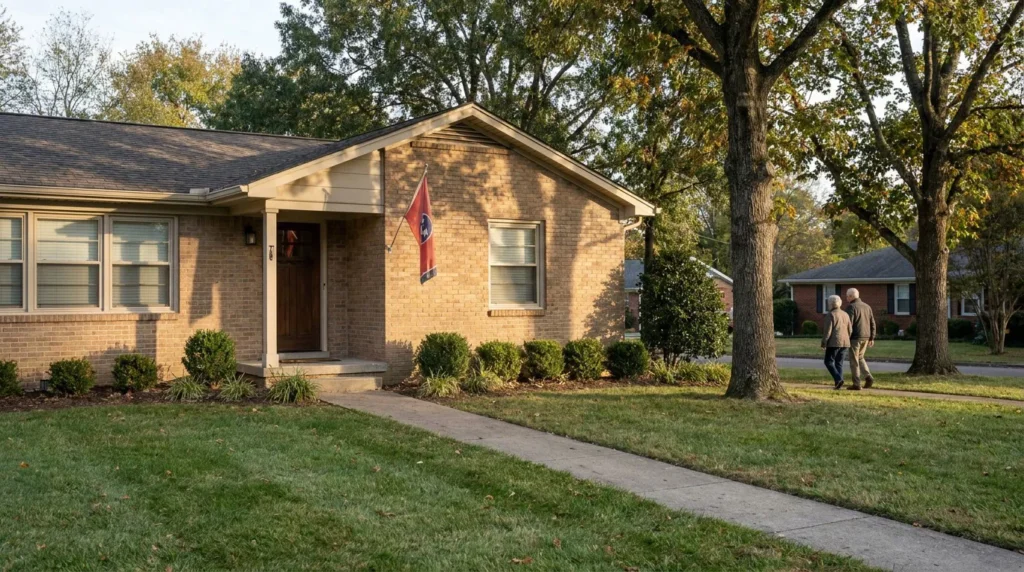
Understanding How TennCare Can Reach a Family Home in Franklin
Key Takeaways: Yes, TennCare can recover value from a home after a recipient’s death in Franklin, Tennessee, but only through probate and under specific, deadline-driven rules. Estate recovery reimburses the state for long-term care costs, applying only to the deceased person’s probate assets, not as a debt your family personally inherits. Whether TennCare can reach a home depends on whether probate is opened and a notice to creditors is issued, which starts a strict legal clock limiting the state’s filing window. TennCare does not automatically jump to the front of the payment line, as administration costs and funeral expenses are paid first. Several exceptions, including the undue hardship waiver for a sole income-producing asset and protections for certain caregiving relatives, may shield the family home. With early planning, such as using irrevocable planning arrangements put in place well before a care need arises, families often have more options than they expect.
Useful? Get our articles in your Google results.
Yes, TennCare can sometimes recover value from a home after death, but only through the probate process and only under specific rules. In Franklin, Tennessee, the Bureau of TennCare has a legal right to seek repayment for certain long-term care costs after a recipient passes away, yet that right is limited, deadline-driven, and full of exceptions. Many families worry the state will simply seize the house. In reality, the process is narrower and more manageable than most people expect, especially with careful planning.
If your family is navigating this difficult moment, the team at Sawyer & Associates is here to help you understand your options. You can call us at 615-570-9901 or reach out through our online contact page to learn how these rules may apply to your situation.

What TennCare Estate Recovery Actually Involves
TennCare estate recovery is the state’s method of reimbursing itself after a recipient’s death for certain care it paid for during life. Federal law requires TennCare to recover costs for nursing home or other long-term care provided to recipients.
Importantly, recovery is not a debt your family inherits. Estate recovery only occurs after death, and your family is not personally responsible. Recovery is limited to assets the deceased person actually owned. You can learn more through Tennessee’s estate recovery program, which explains the state’s general approach.
The estate that TennCare can reach is generally the probate estate. Your estate consists of property, belongings, money, and other assets you own before death, including your house, car, or bank accounts. Property that passes outside probate, such as assets held in a properly structured irrevocable trust or life insurance policies with a named beneficiary, generally falls outside the reach of recovery. However, assets in a revocable living trust are not necessarily protected in Tennessee, because TennCare can petition to bring those assets back into the estate to satisfy its claim.
Why Probate and Notice to Creditors Matter So Much
Whether TennCare can reach a Franklin home often depends on how, and whether, probate is opened. When a personal representative properly opens an estate and issues a notice to creditors, it starts a legal clock that can sharply limit the state’s window to file a claim.
The timing rules are set out in Tennessee’s probate creditor statute. If the Bureau of TennCare receives a notice to creditors within 12 months of the decedent’s date of death, its claims are forever barred unless it files a claim or brings or revives suit within the later of 12 months from the date of death or 4 months from the date it received the notice to creditors. These deadlines under Tenn. Code § 30-2-310(c)(1) are strict, and courts generally interpret such filing requirements narrowly.
When no notice is given, the state gets much more time. If the Bureau of TennCare does not receive a notice to creditors within 12 months of the decedent’s date of death, its claims are forever barred unless it files a claim or files a petition to open or re-open the estate within 48 months of the decedent’s date of death. That is why properly issuing notice is one of the most practical steps a family can take. You can review these creditor claim deadlines through the Tennessee probate code provisions for the full statutory text.
💡 Pro Tip: These deadlines separate the government’s administrative recovery interest from an ordinary civil lawsuit. Do not assume a deadline "automatically" tolls or extends.
Where TennCare Stands in Line During Probate
TennCare’s claim does not automatically jump to the front of the payment line. When a Franklin estate is administered, valid claims are paid in a set order of priority. Costs of administration are paid first, then reasonable funeral expenses, and third are taxes and assessments imposed by federal or state government, including claims by the Bureau of TennCare pursuant to Section 71-5-116. This ordering appears in Tenn. Code § 30-2-317(a).
When an estate is small, this priority order can shape what TennCare actually collects. No demand of one class is paid until prior classes are satisfied, and if assets are insufficient to pay a whole class, claims in that class are paid pro rata. In practice, a modest estate may have limited funds left after administration and funeral costs.
How TennCare Files Its Claim
To collect, TennCare must act through the probate court, not by simply taking property. The state generally files a motion or claim with the probate court to recover from the estate, and it may also petition to open or re-open an estate and to pull in non-probate assets such as revocable trust property. This is subject to the same deadlines and priority rules discussed above.
Exceptions That May Protect the Family Home
Tennessee law recognizes an undue hardship exception that can waive or delay recovery. TennCare will not pursue estate recovery if the estate qualifies for an undue hardship exception, which includes property that is the sole income-producing asset of the survivors. A common example is a family farm or family business.
Caregiving relatives may also qualify for protection. The hardship and transfer rules can cover certain family members who lived in and cared for the beneficiary before nursing home admission:
- A sibling who has an equity interest in the home and lived in the beneficiary’s home and provided care for at least 1 year before admission.
- A child who lived in the home and provided care that helped delay admission for at least 2 years before the beneficiary was admitted.
Families can also formally request relief from the state. If money is not owed to TennCare or if the estate qualifies for a waiver or undue hardship, TennCare will send you a letter releasing or deferring the estate from having to pay TennCare back. This is typically done by submitting a Request for Release form.
Keeping Up the Property While Probate Is Pending
While a Franklin home sits in probate, the personal representative has limited authority to maintain it. For up to four months after death, the personal representative is authorized but not required to pay reasonable routine upkeep of real property, such as utility services, day-to-day maintenance, lawn service, and insurance premiums. Under Tenn. Code § 30-2-323, this authority does not extend to mortgage note payments, real estate taxes, major repairs, or other extraordinary expenses.
Practical Steps for Protecting a Home From TennCare
The best time to think about protecting a home from TennCare is generally before a care crisis, not after. A common misconception is that having a will avoids probate. It does not. A will still passes through probate, and while a revocable living trust allows assets to pass outside probate, avoiding probate is not the same as avoiding TennCare. In Tennessee, a revocable living trust does not by itself shield assets from estate recovery, because the state can seek to bring revocable trust property back into the estate to pay its claim. Protecting a home from recovery generally requires irrevocable planning arrangements put in place well in advance.
Because TennCare recovery can reach both probate assets and revocable trust assets, thoughtful planning can make a meaningful difference. Strategies such as properly structured irrevocable trusts and other lawful arrangements may keep certain property beyond the reach of recovery, subject to eligibility rules, Medicaid’s look-back period, and timing considerations. To understand how advance planning works, read our guide on Medicaid crisis planning in Tennessee, which explains options for families facing nursing home costs.
Every family’s situation is different, so individualized guidance matters. Working with an elder law attorney in Franklin can help you weigh the options that fit your circumstances.
Frequently Asked Questions
1. Can TennCare force the sale of a home right after death?
Not immediately in most cases. Estate recovery will not take place until after the death of the beneficiary. The state must still act through probate and meet the applicable deadlines.
2. Are my children responsible for paying TennCare back?
Generally, no. Estate recovery only occurs after your death, and your family is not personally responsible for the debt. Recovery is limited to the assets the deceased owned.
3. Does a will keep our home out of probate and away from TennCare?
No. A will still goes through probate. Because TennCare recovery reaches probate assets, a will alone does not shield the home. A revocable living trust can avoid probate but generally will not, by itself, protect assets from TennCare in Tennessee; a properly structured, irrevocable arrangement set up well in advance is typically what is needed.
4. What if the home is our family’s only source of income?
An undue hardship exception may apply. Property that is the survivors’ sole income-producing asset, like a family farm or business, can act as a waiver to recovery. Eligibility depends on the specific facts.
5. How long does TennCare have to file a claim?
It depends on whether notice to creditors was given. With proper notice, the window is much shorter under Tenn. Code § 30-2-310(c)(1). Without notice, the state may have up to 48 months from the date of death to file.
Bringing It All Together for Franklin Families
TennCare can seek repayment from a home after death, but its reach is limited by probate rules, strict deadlines, a defined payment priority, and several meaningful exceptions. Between the notice-to-creditors clock, the undue hardship protections, and the difference between probate and non-probate assets, families in Franklin often have more options than they realize. The key is understanding these rules early and acting with clear, informed guidance.
You do not have to sort through these questions alone. The compassionate team at Sawyer & Associates offers a free 30 minute consultation, along with a veteran discount, to help families protect what matters most. Call 615-570-9901 or schedule your consultation online to take the next step toward peace of mind.
Have questions about your situation? Talk with our Tennessee estate planning and probate attorneys.
Related Reading
This article is part of our guidance on Medicaid Crisis Planning. You may also find these helpful:
- Can TennCare Recover From a Home Held in Joint Tenancy in Tennessee?
- What Is the $2,982 TennCare Income Cap for 2026 in Franklin?
- Can a Spouse Keep the Home During Medicaid Planning in Tennessee?
Follow Sawyer & Associates in Google
Add us as a preferred source and our probate, estate planning and elder law articles surface higher when you search these questions in North Carolina, South Carolina and Tennessee.